






No Teeth? No Problem!
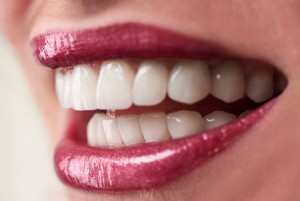 Are missing teeth causing you difficulty, discomfort or embarrassment? Don’t worry – we have all the facts about tooth replacement treatments and the effectiveness of dental implants as a long-term solution for missing teeth.
What are dental implants?
Dental implants are replacement teeth made of titanium. They are composed of an artificial crown attached to a screw that is surgically implanted into the jaw for stability. Implants are an effective treatment for missing teeth because they maintain the strength of the jaw.
There are a few alternative treatment options, some more lasting than others:
Flippers are temporary, removable plastic teeth. They are attached to a retainer for easy removal. Flippers are one of the most cost efficient tooth replacement methods; however, they are the least durable alternatives to dental implants and are considered short-term solutions until a more lasting treatment can be performed.
Fixed bridges literally “bridge” gaps caused by one or more missing teeth. A dental bridge consists of a false tooth, called a pontic, and two abutment teeth, which are crowns that anchor the bridge to the teeth on either side of the gap. Abutment teeth can be secured to both natural teeth and dental implants; however, anchoring them to natural teeth can cause damage.
Dentures are a common treatment for individuals missing all their teeth in one or both of their jaws. They are made of a removable frame that holds an entire set of teeth.
Removable partial dentures are removable frames that hold a partial set of teeth rather than a full set of teeth. This option is often considered for individuals who are missing some but not all of their teeth in one or both jaws.
Why choose dental implants?
Implants are the longest lasting treatment for missing teeth. With proper care, dental implants can last up to ten years or longer. Because they are surgically anchored into the jawbone, they function like natural teeth.
 As doctors, we always weigh the risks and benefits of any procedure or medication therapy. One of the most significant procedures that we perform in our office is orthognathic surgery, more commonly known as “jaw surgery”.
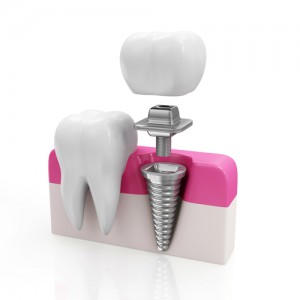 What are dental implants? Dental implants are replacement tooth roots that provide a foundation for both fixed and removable replacement teeth. Like roots, dental implants are secured within the jawbone and not visible once surgically placed. Teeth replacement is not new to dental technology. Early civilizations practiced teeth replacements; archaeologists have discovered skulls where teeth have been replaced by cast iron and sea shells. Despite their primitive methods, some of these implants were fused with bone like modern dental implants! However, unlike the ancient cast iron or sea shell implants, modern implants are composed of titanium. Titanium is lightweight, strong, and biocompatible.
 Wisdom tooth removal has become somewhat of a rite of passage – puffy-cheeked post-extraction photos, a diet of Jell-O and mashed potatoes. But not everyone gets their wisdom teeth taken out. In fact, not everyone has wisdom teeth at all! Have you ever wondered why some people have four wisdom teeth while others have fewer or even none? We’ve got the facts behind how many wisdom teeth people have and why!

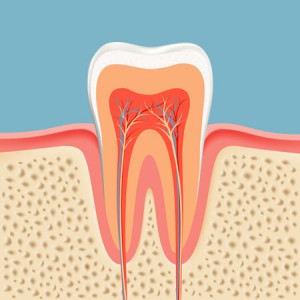 It’s no secret that root canal therapy (RCT) saves your natural teeth by removing infected pulp. What exactly is dental pulp, though? It’s a lot more important than you may realize — keep reading for some pulp trivia!
 Orthognathic surgery, commonly referred to as “jaw surgery,” is used to correct a wide range of both minor and major skeletal and dental irregularities, often the misalignment of the jaws and teeth. Patients looking at undergoing Orthognathic surgery are often faced with an extensive recovery period, as well as a restricted diet in the beginning of their recovery process. Post-surgery patients are discouraged from chewing to allow the bone to heal and stabilize. Due to the fact that adequate healing can take up to 8-12 weeks, patients will initially be on the “swallowing diet” for a number of weeks.

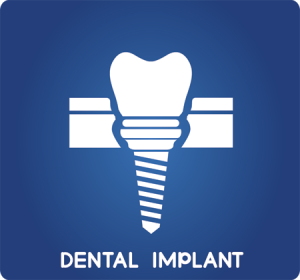 It depends on just how strong and healthy your jaw is. Your jaw may very well be ready to receive the new tooth quickly, but it may also take time to grow around the screw. If your jaw is weak, we can also transplant bone from other parts of your body first, via another procedure called “bone grafting”, to grow a fresh, strong base where the screw can be inserted. If that is the case, the whole process takes more time, but again, it depends on your case.
 stressful injury such as this.